Brhia: The Expressive Power of Textured Brush Typography
More Than Just a Font: Capturing Raw Energy on the Page
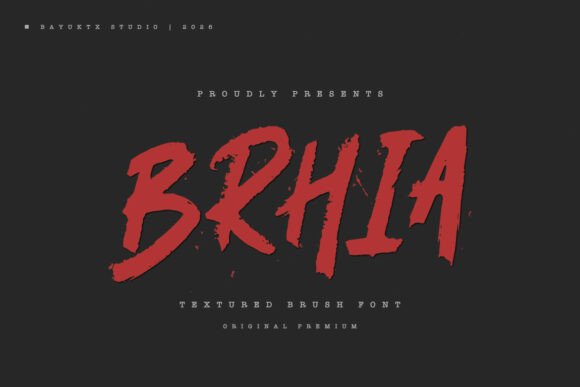
When you first encounter the Brhia Textured Brush Font, it doesn’t feel like a digital asset; it feels like a piece of art. In a landscape dominated by clean, geometric sans serif fonts, Brhia offers a refreshing return to raw, human energy. It is a premium font that draws directly from the aesthetic of hand-painted lettering and gritty artistic textures. This isn't about perfection; it is about attitude. The design captures the dynamic movement of a brush, preserving the rough edges, ink splatters, and organic flow that often get smoothed out in modern typography. For designers and creatives looking to inject personality into their work, Brhia serves as a bridge between the rebellious spirit of street art and the polish required for professional branding.
The visual characteristics of Brhia are defined by its textured details. Unlike standard vector fonts that look sterile, this typeface features natural imperfections that make the text look as though it was just inked onto the surface. This authenticity is crucial for modern brand identity. Whether you are working on a logo design for an edgy startup or creating editorial layouts for a lifestyle magazine, the gritty aesthetic of Brhia provides an immediate sense of character. It tells the viewer that the brand behind the text is bold, confident, and unafraid to stand out.
Strategic Applications: Where Brhia Shines Brightest
Understanding where to deploy a display font like Brhia is key to maximizing its impact. Because of its heavy weight and textured surface, it is not designed for long-form body text. Instead, it excels as a headline generator. In the realm of packaging design, Brhia can be a game-changer. Imagine a craft beer label, a line of artisanal hot sauces, or a streetwear clothing tag. The rough, hand-drawn feel of the font immediately communicates a product that is handmade, authentic, and high-quality. It bypasses the need for lengthy descriptions, letting the typography do the talking.
Beyond physical products, Brhia is a powerhouse in the digital space. Social media graphics require immediate stopping power, and the bold, rebellious character of this font commands attention in a crowded feed. It is perfect for quote posters, promotional banners, and YouTube thumbnails where you need to convey emotion instantly. Furthermore, in web design, using Brhia for hero sections or call-to-action buttons can break the monotony of standard web-safe fonts. It adds a layer of artistic flair that engages visitors and encourages them to explore further. When paired correctly, it can elevate a standard website into an immersive brand experience.
The Psychology of Texture: Influence on Brand Perception
Typography is a silent ambassador for a brand, and the choice of a creative font like Brhia sends specific psychological signals. The rough, textured strokes evoke feelings of warmth, creativity, and rebellion. Unlike the cold precision of a geometric sans serif font, Brhia suggests that there is a human behind the design. This is vital for entrepreneurs and small business owners trying to build trust. A brand identity built around a hand-drawn aesthetic feels more approachable and personal. It tells your audience that you value craftsmanship and are not afraid to show your work's "rough edges."
Visual hierarchy is another area where Brhia proves its worth. In editorial design, such as magazine layouts or blog headers, the contrast between a textured brush font and a clean serif font or sans serif font creates a striking focal point. This contrast guides the reader's eye naturally to the most important information. By using Brhia for headlines, you create a strong anchor that holds the design together. However, readability must always be a priority. While the font is legible at large sizes, its intricate details require sufficient scale to be appreciated. It is best used for short, impactful phrases where the visual weight can be fully realized without overwhelming the viewer.
Practical Implementation: Pairing and Licensing
Integrating a bold typeface like Brhia into your design assets requires a thoughtful approach to font pairing. Because Brhia is so expressive and high-contrast, it demands a partner that is subtle and structured. A classic combination involves pairing Brhia with a clean, minimal sans serif font for body copy. This allows the headline to pop without causing visual fatigue. Alternatively, for a more vintage or editorial look, you might pair it with a traditional serif font. The key is balance; let Brhia be the star of the show while the supporting font handles the heavy lifting of readability.
Before finalizing your choice, it is essential to review the specific styles included with the commercial font. High-quality premium fonts often come with alternates, ligatures, and stylistic sets that allow you to customize the look of the text further. Checking these features ensures that you can create unique combinations that avoid repetition. Additionally, always verify the licensing terms. Whether you are using the font for client work, merchandise, or digital products, ensuring you have the correct commercial license protects your project legally. Taking the time to test the font in various contexts—mockups for packaging, headers for web design, and overlays for video content—will help you fully understand its versatility and ensure it aligns perfectly with your creative vision.