Vintage Bow: Crafting Charm with a Retro Display Font
There’s a specific kind of warmth that comes with retro design, a nostalgic pull that modern minimalism sometimes misses. If you’re looking to inject that cozy, handmade feeling into your next project, you’ll likely encounter the Vintage Bow typeface. This isn't just another script font; it’s a carefully crafted tool designed to bridge the gap between professional typography and the organic look of hand-lettering. For designers, entrepreneurs, and hobbyists alike, understanding how to wield a premium font like this can be the difference between a generic layout and a brand identity that truly resonates.
The Visual Personality and Appeal
At its core, Vintage Bow is a display font characterized by its playful, hand-drawn aesthetic. It sits comfortably in the category of a handwritten font, but it avoids the chaotic look of rough sketches. Instead, it offers a fluid, bouncy baseline that mimics the natural pressure and flow of a brush or pen. The characters often feature distinct loops, swashes, and a slight irregularity that feels human rather than mechanical. This style makes it incredibly versatile for projects that need a touch of whimsy without sacrificing legibility.
The personality of this creative font is approachable and artistic. It feels personal, as if it were written specifically for the viewer. This is a massive asset in a world saturated with sterile, geometric sans-serifs. While it functions beautifully as a script font, it maintains a modern edge that prevents it from looking dated. It captures the essence of "vintage" not by looking old, but by invoking the craftsmanship associated with older design eras.
Real-World Applications: From Branding to Crafts
So, where does a typeface like Vintage Bow actually fit into your workflow? The answer is surprisingly broad. Because it is a versatile commercial font, it adapts well to various mediums, provided you understand its strengths.
Brand Identity and Logo Design
For small business owners—especially those in the lifestyle, beauty, food, or boutique sectors—Vintage Bow is a strong contender for logo design. It immediately sets a tone of friendliness and creativity. A coffee shop, a handmade jewelry store, or a wedding photographer could use this font to signal that their services are personal and detail-oriented. However, a word of caution: because display fonts are ornamental, they work best for short headlines or brand names, not for long paragraphs.
Packaging and Product Design
Imagine a label for artisanal jam or a header on a candle box. Packaging design often relies on emotional connection, and Vintage Bow delivers exactly that. It pairs exceptionally well with clean sans serif fonts for the product descriptions, allowing the main product name to pop with personality.
Digital Media and Web Design
In the realm of web design and social media graphics, attention spans are short. This font is perfect for creating eye-catching headers, call-to-action buttons, or Instagram quote posts. It adds a human element to digital interfaces that can sometimes feel cold. If you are creating a Pinterest pin or a YouTube thumbnail, this typeface ensures your text doesn't get lost in the noise.
Editorial and Publishing
For bloggers and publishers, editorial design benefits from the contrast between a stylized header and a readable body text. Using Vintage Bow for chapter titles in a cookbook or pull quotes in a lifestyle magazine adds a layer of visual interest that keeps readers engaged.
Technical Versatility: File Formats and Software Compatibility
A major selling point for modern creatives is the adaptability of the font files. Vintage Bow typically comes with OTF (OpenType Font) and TTF (TrueType Font) files. This ensures compatibility across almost all operating systems.
Furthermore, for those who work on tablets, this font is often optimized as a ProcreateFont. This is a game-changer for illustrators and digital artists who prefer the tactile feel of drawing on an iPad. You can install it directly into the app and use it to add text overlays to your digital art seamlessly.
Adobe users aren't left out either. Whether you are working in Affinity Designer, Affinity Photo, or the broader Adobe Creative Cloud, the font installs just like any other system font. This makes it a reliable part of your design assets library, ready to be pulled up whenever a project calls for that specific retro charm.
Strategic Pairing and Readability
One of the most critical skills in using a vintage font is knowing how to pair it. Because Vintage Bow has high visual interest, it can become overwhelming if overused. The golden rule of font pairing is contrast.
Pair Vintage Bow with a clean, geometric serif font or a neutral sans serif font. For example, if you are designing a wedding invitation, use Vintage Bow for the names of the couple, but switch to a legible serif like Garamond or a modern sans-serif like Montserrat for the venue details and RSVP information. This creates a visual hierarchy that guides the reader’s eye naturally from the most important information to the details.
When it comes to readability, size matters. Display fonts are not designed for body copy. Using Vintage Bow at 12pt for a paragraph will likely result in a headache for your reader. Keep it large—usually 24pt and above—where the unique characteristics of the letterforms can be appreciated without straining the eyes.
Beyond the Alphabet: Dingbats and Extras
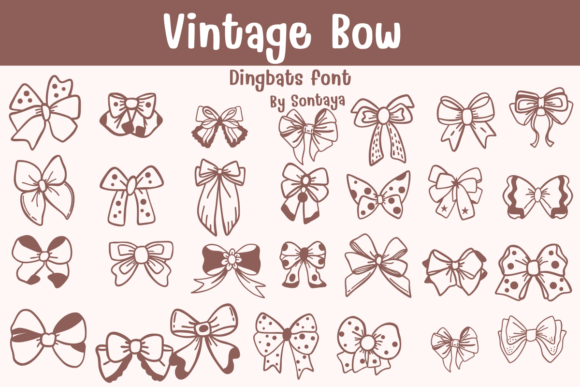
Many high-quality font packages include more than just letters. Look for "extras" like dingbats or doodle illustrations that come with the font. These assets are incredibly useful for filling negative space in a layout without having to search for separate vector graphics. If Vintage Bow includes floral doodles, arrows, or decorative frames, use them to create a cohesive look in your packaging design or scrapbooking projects.
Additionally, check for alternate characters and ligatures in the OTF file. These allow you to swap out specific letters to create a more authentic handwritten flow, preventing repetition in words with double letters (like "ll" or "oo").
Making the Decision: Is Vintage Bow Right for Your Project?
Choosing the right typeface is a strategic decision. Ask yourself: Does my brand voice speak with warmth and creativity? Is my target audience looking for authenticity? If you are a crafter making SVG files for Etsy, or a marketer designing a flyer for a local fair, this font is likely a perfect match.
However, if you are designing for a fintech startup, a law firm, or a medical institution, a playful handwritten font might undermine your credibility. In those cases, a strong, stable serif or sans-serif is a better choice.
Ultimately, Vintage Bow is a powerful tool for modern typography that leans into nostalgia. It allows you to create brand identity materials that feel handmade yet professional. By respecting its nature as a display font and pairing it wisely, you can elevate your designs from simple layouts to memorable visual experiences.