Why California Enchanting Feels Like a Friendly Wave in Your Design
The Warmth in the Curves: Understanding the Font's Personality
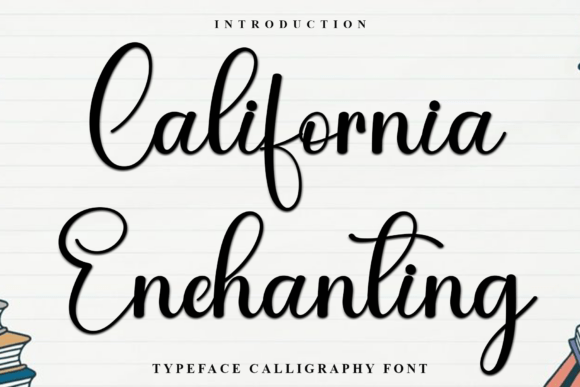
When you first encounter California Enchanting, the immediate impression is one of warmth. This isn't a font that demands attention with sharp angles or rigid geometry; instead, it invites you in with its round, playful strokes and relaxed, hand-drawn aesthetic. Think of it as the typographic equivalent of a sunny afternoon—approachable, casual, and inherently friendly. Its charm lies in its imperfections, which feel authentic rather than polished to corporate sterility. This creative font carries a distinct personality that can soften a message, make a brand feel more human, or add a layer of personal touch to a project. It's a typeface that doesn't just convey words; it conveys a feeling of approachability and creativity.
The visual characteristics are key to its appeal. The letterforms are designed with a sense of fluidity, avoiding the stiffness often found in more traditional serif font or sans serif font options. This makes it particularly effective for projects where you want to bridge the gap between professionalism and personal connection. It's not trying to be a script font in the formal, calligraphic sense, but it borrows some of that handwritten energy, placing it firmly in the realm of a modern handwritten font. The result is a premium font that feels accessible, making it a versatile tool in a designer's toolkit.
Where This Font Truly Shines: Practical Applications
Choosing the right typeface is about matching its voice to your project's goal. California Enchanting excels in scenarios where a friendly, creative, and personal tone is paramount. Its strengths are most visible in projects that benefit from a touch of human warmth.
In the realm of brand identity, this font can be a strategic asset for businesses that position themselves as approachable and customer-centric. A boutique coffee shop, a handmade jewelry line, a wellness coach, or a local florist could use it for their logo design to immediately signal a welcoming atmosphere. It works beautifully for brand names, taglines, and short headings on websites and packaging. However, for body copy in long-form articles or technical documentation, its readability at smaller sizes might be a consideration; pairing it with a clean, neutral sans serif font for paragraphs is a common and effective practice.
For marketing and social media graphics, its value is clear. The font's playful character grabs attention in a crowded feed. Use it for Instagram quote graphics, Facebook ad headlines, or Pinterest pin titles. Its hand-drawn style cuts through the digital noise, making messages feel more personal and shareable. Similarly, in editorial design for blogs, magazines, or newsletters, it can serve as a striking headline font for lifestyle, food, or travel content, setting a relaxed and engaging tone from the first glance.
Personal projects and crafting also benefit immensely. Think wedding invitations, greeting cards, personalized stationery, or scrapbook layouts. California Enchanting adds that bespoke, crafted feel without requiring advanced calligraphy skills. Its PUA Encoded glyphs ensure that all its special characters and ligatures are easily accessible across popular design applications like Adobe Photoshop, Adobe Illustrator, Corel, and Canva, making it a practical choice for hobbyists and professionals alike.
Integrating California Enchanting into Your Workflow: A Designer's Guide
Adopting a new design asset like a font requires more than just liking its look. It involves evaluating its fit, testing its limits, and understanding its technical specifications. Here’s how to approach integrating California Enchanting into your projects thoughtfully.
First, evaluate the project fit. Does the project's personality align with the font's friendly, creative vibe? It's perfect for a children's birthday party invitation but likely less suitable for a law firm's annual report. Consider your audience engagement goals. Are you trying to build warmth and trust? This font can help. Are you aiming for sleek, minimalist authority? You might want to look elsewhere.
Next, test font pairings. A font pairing is crucial for creating visual hierarchy and ensuring overall readability. California Enchanting often pairs best with a simple, geometric sans serif font or a classic, understated serif font. The contrast allows the playful font to stand out for headlines and highlights, while the paired font handles the bulk of the text, maintaining clarity and professionalism. Test these combinations in your actual design software to see how they interact in terms of size, weight, and spacing.
Review the included styles and weights. Many premium fonts come with multiple weights (light, regular, bold) or stylistic alternates. Check what variations are included with California Enchanting. Does it have a bold weight for emphasis? Are there alternative characters that give you more design flexibility? Understanding these options allows you to use the font more dynamically.
Finally, consider the practicalities. For any commercial use, ensure you have the correct license. While the font is described as PUA Encoded for ease of use, always verify the license terms for your specific project—whether it's for a client, a product for sale, or digital distribution. Test the font across different platforms and sizes to ensure it renders well in both web design and print contexts. A font that looks great on your screen might need adjustments for mobile views or small-scale packaging design.
In essence, California Enchanting is more than just a set of letters. It's a tool for adding personality, warmth, and a creative spark. By understanding its character and applying it with strategic thought, you can leverage its friendly aesthetic to connect with your audience on a more human level, whether you're building a brand, crafting a message, or designing a personal keepsake.